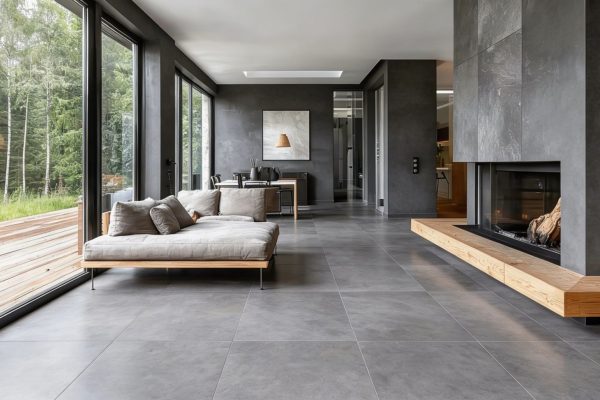
The open-plan kitchen living room is one of the most popular design choices in contemporary architecture. Integrating the kitchen and living room into a single space allows you to enhance the sense of space and encourage conviviality, but it requires careful management of functions. Zoning is an interior design technique that consists of dividing a single space, in this case an open-plan kitchen, into distinct and well-defined functional areas without the use of dividing walls.Well-structured zoning allows you to immediately identify the function of each area within the open space. In the absence of walls, in an open- plan kitchen living room, the floor becomes a key element in defining functions and organising space and boundaries.
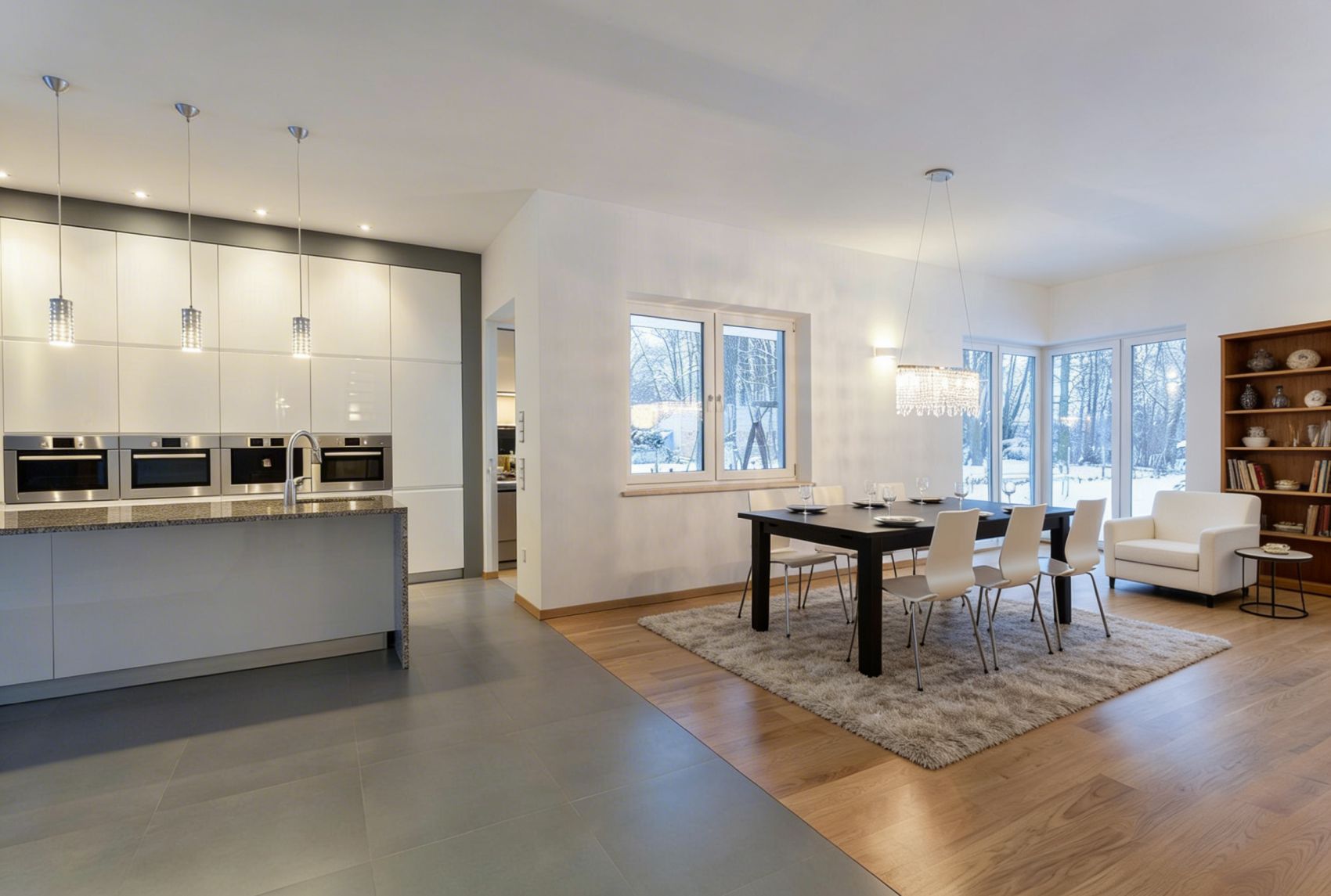 While an open living room often calls for a more elegant and sophisticated atmosphere, an open-plan kitchen living room requires practical, durable surfaces that are easy to maintain on a daily basis. This is where kitchen floor tiles are the ideal solution. Kitchen tiles guarantee high technical performance, moisture resistance and ease of maintenance, qualities that are essential in an open-plan kitchen living room that is used every day and always visible. Kitchen tiles also do not absorb odours or liquids, helping to maintain a hygienic environment. Through solutions such as tile rug, tiles and wood combinations or contrasting materials in an open-plan kitchen living room, it is possible to create elegant, technical and durable zoning.
3 Solutions for defining an open-plan kitchen with kitchen tiles
1.The rug tile in an open-plan kitchen
1.The rug tile in an open-plan kitchen
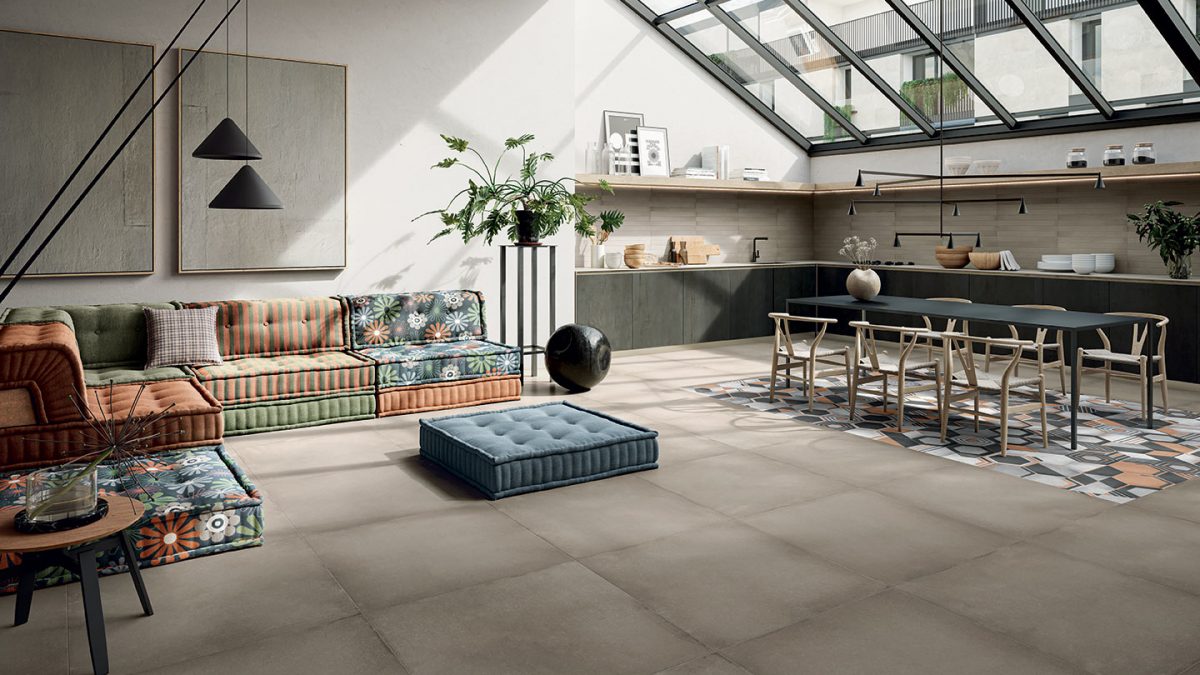
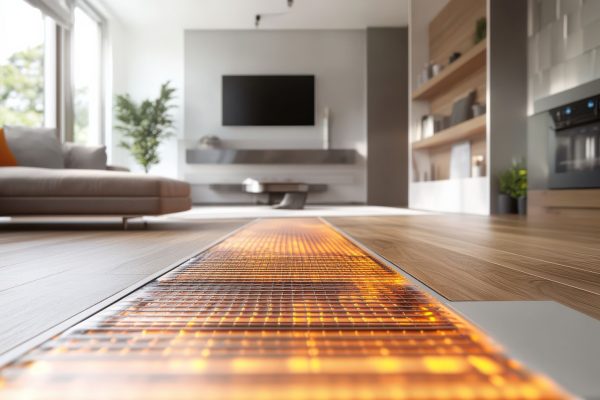
Rug tile is one of the most sought-after solutions for distinguishing the kitchen from the living room in an open space. The principle is simple but extremely effective: create an area covered in stoneware within a different floor, usually parquet, so as to visually define the working area of the open-plan kitchen living room. Kitchen floor tiles are often selected with decorative patterns to enhance the visual identity of the cooking area. Geometric designs, encaustic-inspired motifs or subtle graphic textures can transform the kitchen floor tiles into a distinctive feature, adding personality and depth to the open space while maintaining durability and practicality. This choice is not only aesthetic but also functional, because the kitchen is an environment subject to humidity and stains, and porcelain stoneware is particularly suitable in these cases thanks to its stain resistance, which makes it ideal for a working environment that is constantly visible.
Thanks to their compact surface, kitchen tiles also simplify daily cleaning and reduce the need for specific treatments. Installing stoneware tiles in high-traffic areas such as around the island or in front of the hob helps protect the floor from wear and stains. Color is another design element: choosing kitchen tiles in darker shades than the living room allows you to define the functional area without interrupting the continuity of the material. Similarly, kitchen tiles in neutral shades can maintain a more harmonious and integrated effect.Novoceram reintroduces the rug tile with the Osmose collection.
2. Combining Parquet and Tiles in an Open-plan kitchen: benefits and tips
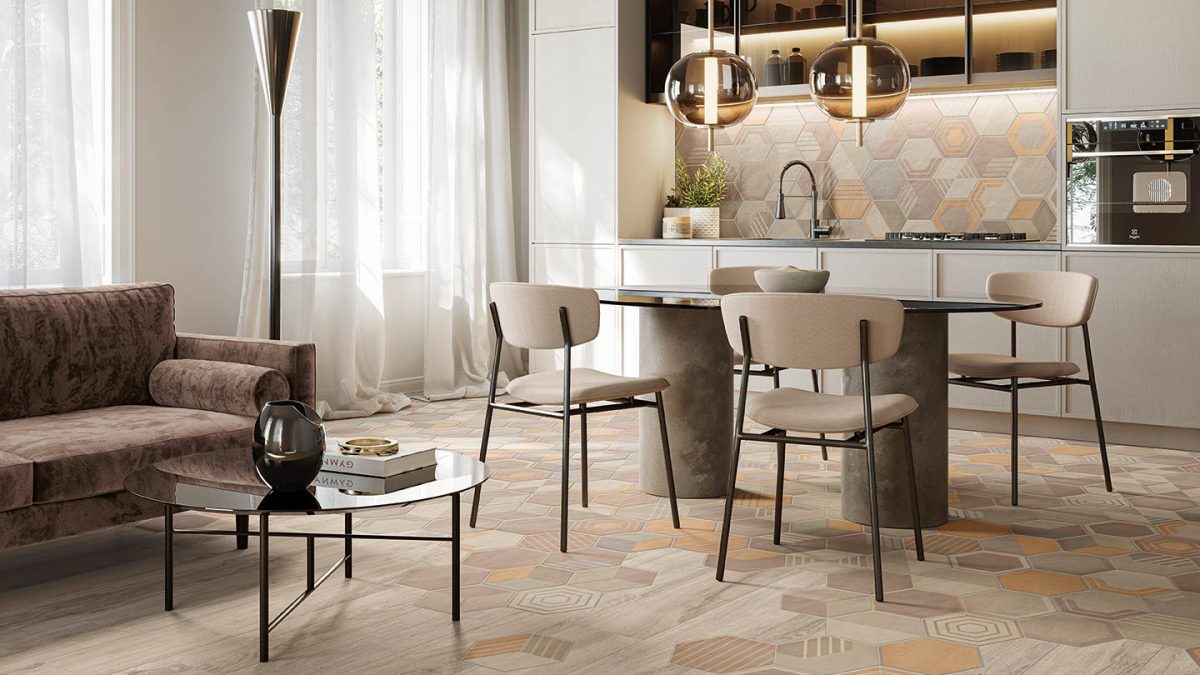
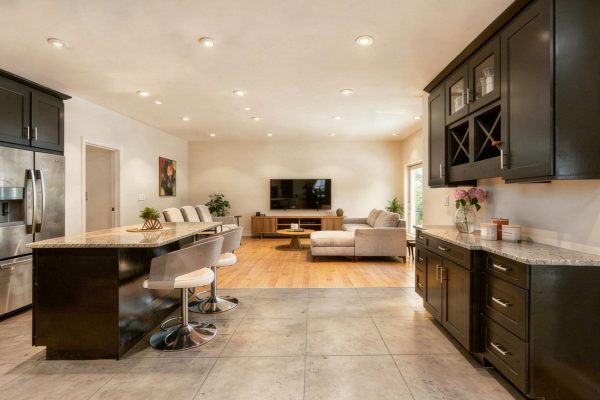
Tiles and wood combinations in the kitchen are now one of the most popular solutions in open-plan kitchen living room design. This combination allows you to blend the elegance of wood, for example, in the living area with the practicality of kitchen tiles in the more functional area of open-plan kitchens. The most minimalist solution is a clean, linear cut, which creates a clear separation to give a modern and decisive touch to your open-plan kitchen living room. In more sophisticated contexts, you can opt for a geometric combination of kitchen tiles and parquet, where the stoneware fits into the wood with shaped or hexagonal forms, creating a dynamic and more dramatic effect, as in the Osmose collection by Novoceram.
Whatever material you choose, the quality of the result always depends on careful technical planning and installation. Kitchen floor tiles are generally between 8 and 10 millimeters thick, while parquet flooring is thicker. This difference must be compensated for when laying the screed or by using appropriate installation systems to achieve a perfectly level surface. An uneven surface that is not correctly managed compromises the overall aesthetics and everyday functionality of the open-plan kitchen living room. For this reason, the design must take into account the coexistence of the two materials from the outset, providing for any necessary compensation leveling and appropriate technical joints.
3. Material contrast with kitchen tiles in an open-plan kitchen
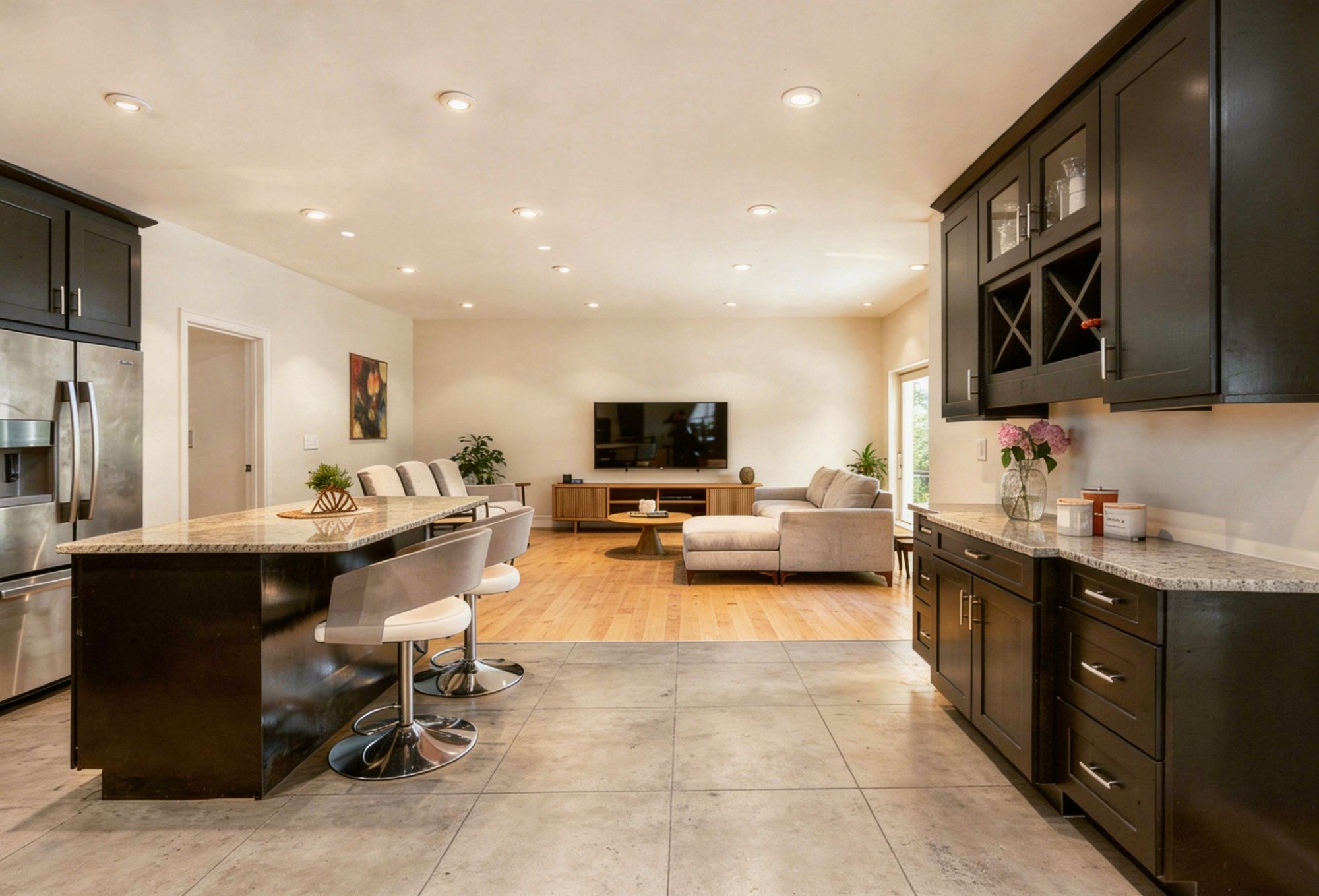
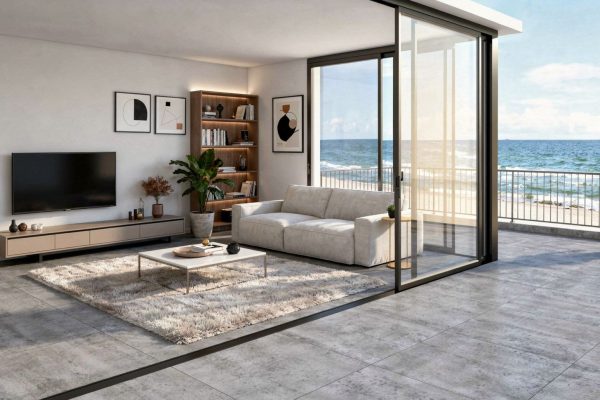
In an open-plan kitchen, defining spaces does not necessarily mean changing materials. You can use only porcelain stoneware, playing with different finishes. From an aesthetic point of view, combining concrete-effect tiles with wood-effect tiles in an open-plan kitchen living room,creates a refined, contemporary contrast between materials. Concrete effect tiles, for example, introduce an urban and minimalist character, ideal for environments with a simple and linear design. Wood effect tiles, on the other hand, create a warmer and more welcoming visual continuity, suitable for the living area. This solution is perfect in a modern open-plan kitchen where continuity but also visual distinction is desired.
In an open-plan kitchen, it is important to choose kitchen floor tiles carefully, avoiding overly strong contrasts or inconsistent finishes that could disrupt the harmony of the space. Defining the open-plan kitchen by choosing a different floor means combining aesthetics and performance. Zoning, through the use of rug tile, mixed parquet and ceramic flooring, or the use of contrasting materials, allows you to organize the space of your open-plan kitchen living room without resorting to physical dividers, enhancing the overall harmony of the environment.